A will is the document that says who inherits what and who you trust to carry it out — and if you have young kids, who raises them. Without one, Illinois law makes those calls for you.
A will is one of the most important documents you’ll ever sign. It says who inherits your property, who raises your children if you can’t, and who’s in charge of settling your estate.
Without a will, Illinois law makes these decisions for you—and the results might not match what you want. Your assets might go to relatives you haven’t spoken to in years. A court might appoint someone you wouldn’t have chosen to raise your kids. Your estate goes through a longer, more expensive probate process.
At Haning Estate Planning, we help families throughout Central Illinois create wills that protect their wishes and their loved ones. We take the time to understand your situation and draft wills that actually work.
We offer flat-fee pricing on all will preparation services. You’ll know exactly what you’re paying upfront—no hourly billing, no surprise invoices.
What’s included in our will packages:
We’ll discuss your specific pricing during your complimentary consultation. Your cost depends on the complexity of your estate and your distribution wishes.
Call to schedule your free consultation.
Here are the situations where you need a will prepared by an attorney:
A will is the only document that names guardians for your kids. Without a will, if both parents die, a court decides who raises your children. You need a will to:
Without a will, Illinois intestacy law decides distribution:
If this doesn’t match your wishes, you need a will.
Wills let you make specific gifts:
Wills let you make specific gifts of property and money.
For simpler estates—mainly bank accounts, investments, personal property—a will might be sufficient. Trusts are better for homeowners (to avoid probate), but if you don’t own real estate, a will might be all you need.
Without a will, Illinois law gives your spouse and children automatic inheritance rights. A will lets you explicitly disinherit people (within legal limits—you can’t completely disinherit a spouse in Illinois).
Second marriages create complex inheritance questions:
A will addresses this, though a trust often works better for second marriages.
Illinois requires three things for a valid will:
The will must be in writing. Oral wills (spoken wishes) aren’t valid in Illinois except in very limited military circumstances.
You must sign the will. You have to sign it yourself, or if you’re physically unable, someone can sign for you at your direction in your presence.
Two witnesses must watch you sign and then sign themselves. The witnesses must be adults who aren’t beneficiaries in the will. They watch you sign, then they sign confirming they witnessed your signature.
We prepare “self-proving” wills that include a notarized affidavit. This makes probate faster because the court doesn’t have to track down witnesses later to confirm the will’s validity.
Your executor is the person who settles your estate:
Choose someone organized and trustworthy. You can name a backup executor in case your first choice can’t or won’t serve.
If both parents die while children are minors, the guardian you name raises your kids. This is the most important part of your will if you have children under 18.
Who inherits what, and in what proportions. You can:
You can create a trust in your will that holds money for children until they reach a certain age. Without this, kids inherit directly at age 18—often too young to manage a large inheritance responsibly.
If you want to explicitly leave nothing to certain family members, your will should say so clearly. This prevents them from claiming you “forgot” them.
Passwords, social media accounts, online banking, cryptocurrency. Your will should address:
Here’s what people misunderstand about wills: a will doesn’t avoid probate. A will requires probate. Probate is the court process of:
In McLean County and Tazewell County, probate typically takes 9-18 months and costs $10,000-$20,000 between court fees, legal fees, executor fees, and other expenses. Probate is also public record—anyone can see what you owned and who inherited.
If you own real estate, a trust avoids probate. That’s why we often recommend trusts over wills for homeowners. But if your estate is simpler (mainly financial accounts and personal property), a will with proper beneficiary designations might be sufficient.
If your estate is under $100,000 and doesn’t include real estate, your family might be able to use a small estate affidavit instead of full probate. This is a simplified process that’s faster and cheaper.
But the $100,000 limit includes everything—bank accounts, investments, life insurance, vehicles, personal property. Most homeowners exceed this limit, so most estates need regular probate.
We help families determine whether they qualify for small estate procedures or need full estate planning.
We work with you through every step of creating your will, from understanding your wishes to ensuring your documents are properly executed. Here’s what to expect:
We also provide ongoing support through annual check-ins and updates. Life changes and your will should change with it. We include free annual check-ins. When you have another child, get divorced, or acquire significant assets, we update your will at no additional cost.
Choosing the right attorney to prepare your will matters. Here’s why families throughout Central Illinois trust us with their estate planning:
We create wills every week for Illinois families. We understand McLean County and Tazewell County courts, Illinois probate procedures, and how to draft wills that hold up in court.
We handle complex family situations. Blended families, disinheritances, unequal distributions, children with special needs, estranged family members—when your situation doesn’t fit a standard template, we figure it out.
We explain wills honestly. We’ll tell you when a will works and when you’d be better served by a trust. We won’t push trust planning on you if a will is sufficient for your situation.
We include powers of attorney with every will. Wills only work after death. Powers of attorney let someone make decisions if you become incapacitated. Both are essential—we include both.
We’re here for updates when life changes. Free annual check-ins mean your will stays current as your life evolves. You’re never stuck with outdated documents.
A properly drafted will protects your children, controls who inherits your property, and ensures your wishes are carried out. Don’t leave these decisions to courts and state law.
Call or contact us online to schedule your complimentary consultation.
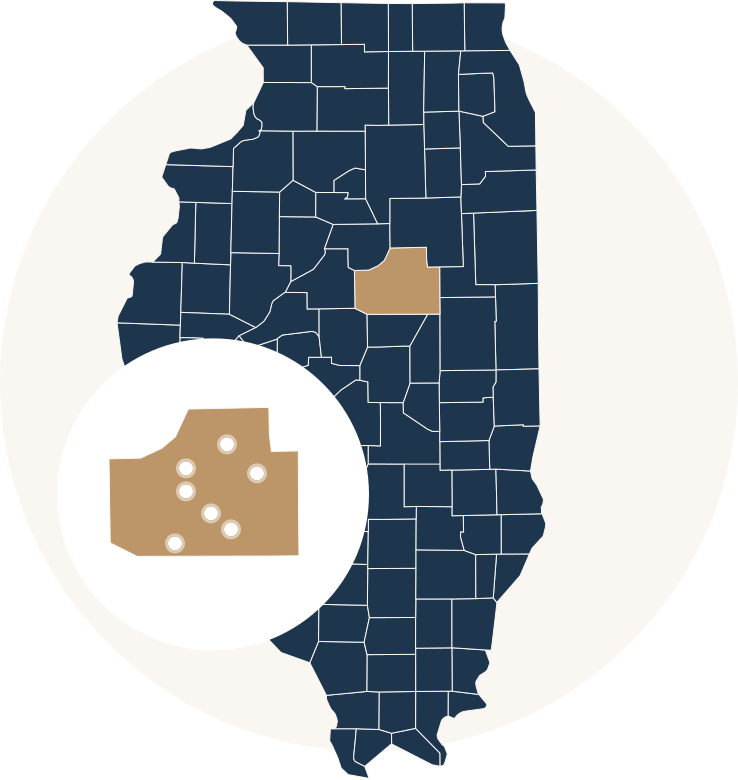
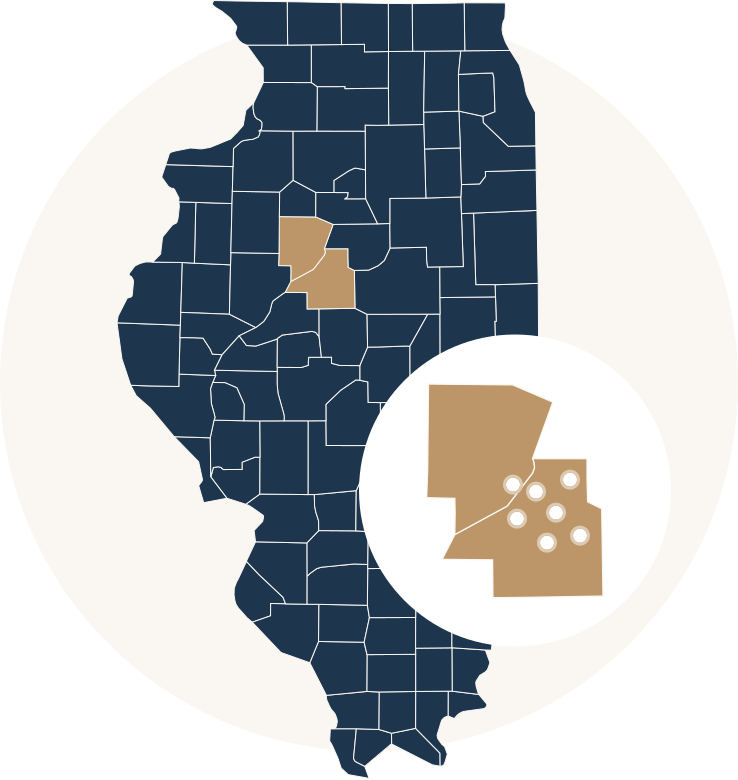
Will preparation services throughout Bloomington, Normal, Morton, East Peoria, Peoria, and Central Illinois.
Legally, you can do it yourself. Practically, we see families spend thousands fixing problems created by online wills. Online forms are generic—they don’t account for Illinois law, don’t consider your specific family situation, and don’t coordinate with asset titling or beneficiary designations. For a few thousand dollars, you get customized documents, attorney guidance, and ongoing support.
Illinois intestacy law decides who inherits. Spouse gets 50%, children split 50%. No spouse? Children split everything equally. No spouse or kids? Parents inherit, then siblings. Courts also decide who manages your estate and, if you have minor children, a court appoints a guardian. These decisions might not match what you want.
You can’t completely disinherit a spouse in Illinois—they have a right to claim a portion of the estate. But you can leave them less than they’d get under intestacy law. You can disinherit children, and your will should explicitly say so if that’s your intent.
Laws change, families change, assets change. If your will is more than 5 years old or was done in another state, you need to review it. We’ll look at your existing will in your consultation and tell you what needs updating.
Review your will every 3-5 years, and update it when major life events occur: marriage, divorce, births, deaths, significant asset changes, moving to a new state. That’s why we include annual check-ins—we’ll remind you to review and update when needed.
Choose someone organized, trustworthy, and willing to serve. Often a spouse or adult child. The executor doesn’t need to live in Illinois, but it’s easier if they do. You can name a backup in case your first choice can’t serve.
Legally yes, but courts prefer keeping siblings together. If you have strong reasons to separate siblings (children from different marriages, children with different needs), your will can address this, but expect the court to question it.
Your will should address digital assets—email accounts, social media, online banking, cryptocurrency, cloud storage. Without instructions, your family might not be able to access these accounts.