
This is one of the scariest questions families face, and I hear it a lot: “If I go into a nursing home, is Medicaid going to take my house?”
The short answer is that Medicaid cannot take your house while you are alive and living in it. But after you pass away, it is a different story. Illinois has a Medicaid Estate Recovery Program that can file claims against your estate to recoup the cost of your long-term care. And for many families, the house is the biggest asset in that estate.
The good news is there are legitimate planning strategies that can protect your home. But timing matters, and the sooner you start planning, the more options you have.
How Medicaid Estate Recovery Works in Illinois
First, let us understand what we are dealing with. When you receive Medicaid-funded long-term care (nursing home care, home and community-based services, etc.) after age 55, Illinois is required by federal law to seek reimbursement from your estate after you die.
Here is an important detail that a lot of people miss: in Illinois, Medicaid estate recovery is limited to assets that pass through probate. This is a big deal, because it means if your home does not go through probate, Medicaid generally cannot reach it through the estate recovery program.
Also worth noting: as of June 2, 2022, Illinois stopped placing liens on real estate for Medicaid recovery purposes. And for estates of Medicaid recipients who died on or after July 1, 2022, the first $25,000 of estate value is exempt from recovery.
But do not let those protections give you a false sense of security. If your home passes through probate and your estate is worth more than $25,000, Medicaid can and will file a claim.
When Your Home Is Exempt During Your Lifetime
While you are alive and on Medicaid, your primary residence is generally exempt from Medicaid’s asset limit, meaning it does not count against you when determining eligibility. But there are conditions.
Your home is exempt if your home equity interest is below $752,000 (the 2026 limit for Illinois), and you live in it or have filed an intent to return home, or your spouse, a child under 21, or a blind or disabled child of any age lives there.
If you are in a nursing home but intend to return home, you can file an intent to return statement to keep the exemption. And if your spouse still lives in the home, it is exempt regardless of equity value.
But remember, exempt for eligibility purposes and protected from estate recovery after death are two different things.
Strategy 1: Put Your Home in an Irrevocable Trust
A Medicaid Asset Protection Trust (MAPT) is one of the most effective tools for protecting your home. When you transfer your home into a properly drafted irrevocable trust, you remove it from your estate. Since Illinois Medicaid estate recovery only applies to probate assets, a home held in an irrevocable trust is generally not reachable.
The critical requirement: you must make this transfer at least five years before you apply for Medicaid. This is because of the Medicaid look-back period. When you apply for Medicaid in Illinois, they look back five years at all asset transfers. If you transferred your home into a trust within that five-year window, it can trigger a penalty period during which you are ineligible for Medicaid benefits.
This is why planning ahead matters so much. If you wait until you need nursing home care to start thinking about this, you may have missed the window.
With a MAPT, you can retain the right to live in the home for the rest of your life. You just cannot be a trustee or have the power to revoke the trust or take the home back. Someone else (your child, a trusted person) serves as trustee.
Strategy 2: Transfer Your Home Using an Exempt Transfer
Medicaid allows certain transfers of your home without triggering a look-back penalty. These exempt transfers include transferring to your spouse, transferring to a child under 21 or a blind or disabled child of any age, transferring to a sibling who has an equity interest in the home and has lived there for at least one year before you were institutionalized, and transferring to a child who lived in the home and provided care that delayed your need for institutional care for at least two years before you were institutionalized (the caregiver child exemption).
The caregiver child exemption is particularly valuable for families where an adult child has been living with and caring for an aging parent. If you can document that your child’s care delayed your need for a nursing home by at least two years, the home can be transferred to that child without a Medicaid penalty.
Documentation is everything with these exemptions. You need records showing when the child moved in, what care they provided, and how that care kept you out of a facility. We help families build this documentation as part of the planning process.
Strategy 3: Use a Revocable Living Trust (With Limitations)
A revocable living trust will keep your home out of probate, and since Illinois Medicaid estate recovery is limited to probate assets, this can protect your home from MERP claims.
However, there is an important caveat. While a revocable trust avoids probate, the assets in a revocable trust are still considered yours for Medicaid eligibility purposes. You cannot use a revocable trust to qualify for Medicaid, but you can use it to protect assets from estate recovery after death.
This distinction confuses a lot of people. A revocable trust does not help you get on Medicaid. But it can help protect your home from Medicaid coming after it once you have passed away, because the home passes outside of probate.
Strategy 4: Transfer-on-Death Instruments
Illinois allows transfer-on-death (TOD) instruments for residential real property. A TOD deed transfers your home to a named beneficiary upon your death, outside of probate.
Since Illinois MERP is limited to probate assets, a home that transfers via a TOD deed may be protected from estate recovery. This is a simpler and less expensive option than a trust, though it does not provide the same level of planning flexibility.
Keep in mind that a TOD deed does not protect you during your lifetime for Medicaid eligibility purposes. The home is still your asset. But after death, the transfer happens outside probate.
What About the Look-Back Period?
The five-year look-back is the biggest timing issue in Medicaid planning. Any transfer of assets for less than fair market value within five years of your Medicaid application can result in a penalty period during which you are ineligible for benefits.
The penalty is calculated by dividing the value of the transferred asset by the average monthly cost of nursing home care in Illinois. So if you transferred a $200,000 home and the average monthly cost is around $7,000 to $8,000, you could be looking at a penalty period of roughly 25 to 28 months during which Medicaid will not pay for your care.
This is why the five-year planning horizon is so important. If you transfer your home into a MAPT today and do not need Medicaid for five years, the transfer is outside the look-back window and there is no penalty.
When Is It Too Late to Plan?
It is never completely too late, but your options narrow significantly once you are already in a nursing home or close to needing one.
If you are within the five-year look-back window, an irrevocable trust transfer may not work without triggering a penalty. In that case, other strategies may still help, like ensuring the home passes outside of probate through a revocable trust or TOD deed to at least protect it from estate recovery.
The best time to plan is before you need care, ideally five or more years before. The second-best time is now, because even partial protection is better than none.
Important Warnings
Medicaid planning must be done carefully and honestly. Transferring assets to avoid Medicaid has strict legal rules, and improper transfers can result in penalties, ineligibility, or even fraud allegations.
Never transfer your home based on advice from a friend, neighbor, or internet article alone. These strategies require proper legal documentation, correct timing, and coordination with your overall estate plan. What works for one family may not work for yours.
How We Handle This at Haning Estate Planning
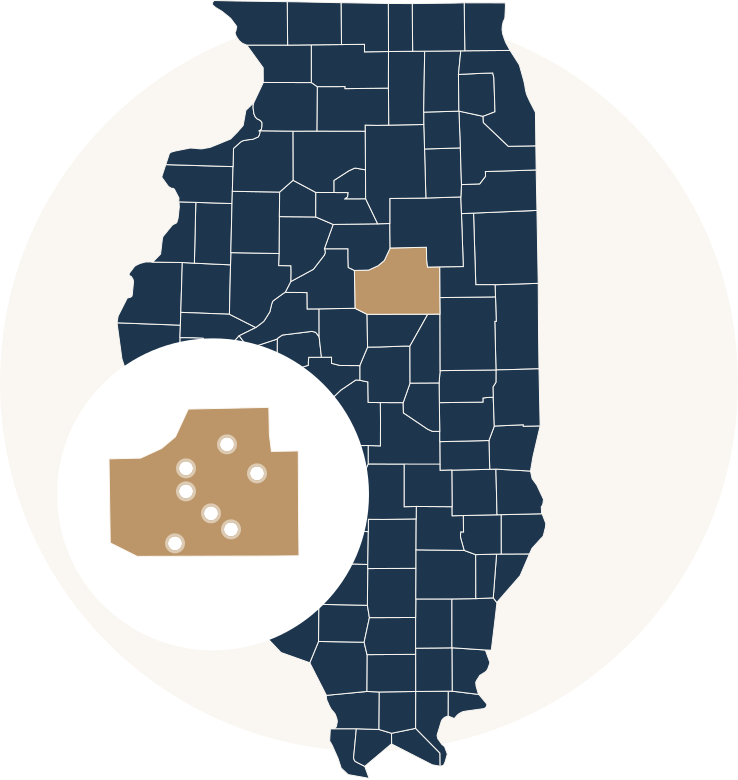
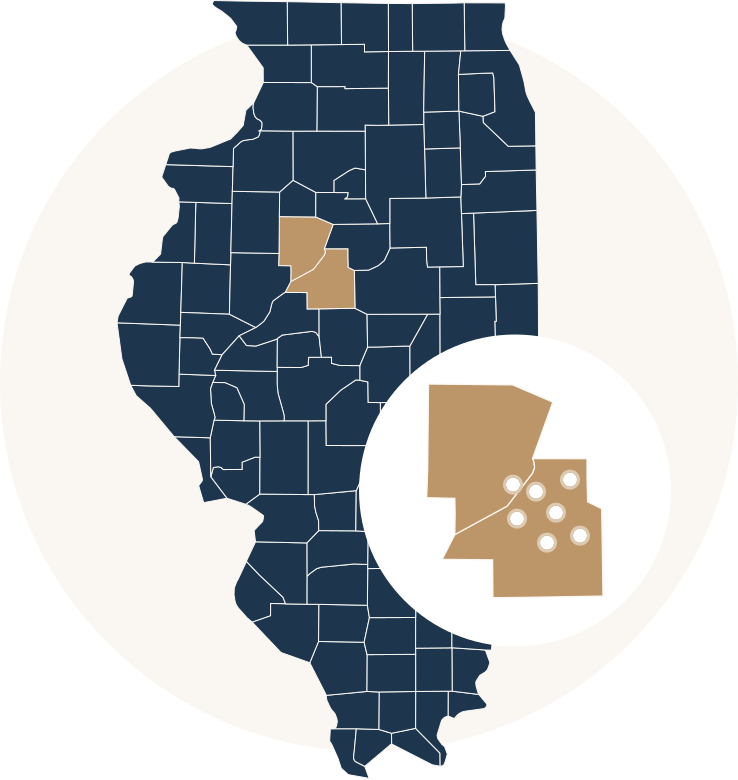
Medicaid planning touches on some of the most complicated intersections of estate planning, elder law, and government benefits. We work with families in Bloomington, Morton, and across Central Illinois who are worried about protecting their homes.
We start by understanding your full financial picture, your family situation, and your timeline. Then we talk through the options that make sense for you, whether that is an irrevocable trust, a revocable trust, a TOD deed, or some combination.
Our flat-fee pricing means you know what you are paying upfront. We include at least two meetings so we can get the details right. And our annual check-ins are especially important for Medicaid planning, because the rules change and your health situation may evolve.
If you are worried about what happens to your house if you need long-term care, let us talk about it sooner rather than later. The more time you have, the more options we can give you.
Frequently Asked Questions
Can Medicaid take my house while I am still alive?
Generally, no. While you are living in your home, it is usually exempt from Medicaid’s asset limit as long as your equity is below $752,000 (2026 limit). If you are in a nursing home, you can file an intent to return home to maintain the exemption. And if your spouse, a minor child, or a disabled child lives there, the home is exempt regardless of equity.
What is the difference between a revocable and irrevocable trust for Medicaid planning?
A revocable trust helps protect your home from Medicaid estate recovery after death by keeping it out of probate, but the assets still count as yours for Medicaid eligibility purposes. An irrevocable trust removes the assets from your estate entirely, which can help with both eligibility and estate recovery, but you must make the transfer at least five years before applying for Medicaid.
What is the Medicaid look-back period in Illinois?
Five years. When you apply for Medicaid long-term care in Illinois, they review all asset transfers made within the preceding five years. Transfers for less than fair market value can result in a penalty period of Medicaid ineligibility.
Does Medicaid estate recovery affect my spouse?
Medicaid cannot pursue estate recovery while your surviving spouse is alive. However, after your surviving spouse passes, any assets remaining in the estate could be subject to recovery. Planning for the surviving spouse’s estate is just as important as planning for the first spouse’s.
What if my estate is worth less than $25,000?
For Medicaid recipients who died on or after July 1, 2022, Illinois exempts the first $25,000 of estate value from recovery. If your entire estate is under $25,000, Medicaid generally will not pursue a claim.
This article is for informational purposes only and does not constitute legal advice. Medicaid rules are complex and change frequently. If you would like to discuss protecting your home from Medicaid, contact Haning Estate Planning to schedule a consultation.
Author Bio

Carissa A. Haning is the owner of Haning Estate Planning in Bloomington, Illinois. She has been practicing law since 2003, focusing on estate planning and probate, because she has seen firsthand how bad planning, or no planning, can tear families apart. Carissa’s goal is simple: prevent problems and litigation with good planning that starts by really getting to know each client. As a mother of three, she knows parents have limited time and resources, so she has made her estate plans accessible and affordable for every family.