Your Wishes, On the Record
A will is the document that says who inherits what and who you trust to carry it out — and if you have young kids, who raises them. Without one, Illinois law makes those calls for you.
Most people think they need a will. And they’re probably right—but not for the reasons they think.
A will doesn’t avoid probate. It doesn’t give your family immediate access to your assets. It doesn’t keep things private.
What a will actually does: It tells the probate court who you want to inherit your stuff and who should raise your kids. That’s it. Everything still goes through court.
So why do you need one? Because without a will, Illinois law decides everything. And Illinois law doesn’t know your family or your wishes.
Will Services in Morton
We don’t bill by the hour. You pay one flat fee that covers:
What’s Included in Every Will Package
Two meetings minimum:
- First meeting: discuss your family and wishes
- Second meeting: review documents before signing
- As many meetings as you need to feel comfortable
Complete document set:
- Will with all necessary provisions
- Financial power of attorney
- Healthcare power of attorney
- Healthcare directive (living will)
- HIPAA authorization
Proper execution:
- Witness coordination
- Notarization
- Self-proving affidavit (makes probate easier for your family)
Ongoing support:
- Free annual check-ins for life
- Updates when life changes
- Simple revisions included
Call (309) 824-6264 to discuss will preparation.
When You Need a Will Lawyer in Morton, Illinois
You Have Kids Under 18
This is the #1 reason to have a will. Only a will can name guardians for minor children.
Without a will naming guardians:
- A judge decides who raises your kids
- Family members might fight over custody in court
- The court process takes months
- Your kids’ future is uncertain while courts decide
With a will:
- You name exactly who raises your children
- You name backup guardians
- Courts respect your wishes (unless there’s serious concern about the guardian you chose)
You Want to Control Distribution
Illinois intestacy law (what happens without a will) might not match your wishes:
- Spouse gets 50%, kids split 50%
- No spouse? Kids split everything equally
- No spouse or kids? Your parents inherit
- No parents? Your siblings split it
Maybe that’s fine. Maybe it’s not. Maybe you want:
- Your spouse to get everything (not just half)
- One child to receive more (they’re caring for you, or have greater need)
- Nothing to go to a certain family member
- Specific items to go to specific people
A will lets you control this.
You Want to Leave Specific Items to Specific People
Maybe your daughter should have your grandmother’s ring. Maybe your nephew should get the truck. Maybe your church should receive $5,000.
A will lets you make these specific bequests. Without a will, everything gets lumped together and divided according to state law.
You Want to Name Your Executor
The executor handles your estate—pays bills, files taxes, distributes assets. Without a will, the court appoints someone. Might be who you’d want. Might not.
With a will, you choose:
- Who handles your estate
- Who has access to your accounts
- Who deals with your property
You Don’t Own Real Estate
If you don’t own a home, you might not need a trust. A will might be sufficient.
Why? Most assets can avoid probate through beneficiary designations:
- Bank accounts: payable-on-death
- Investment accounts: transfer-on-death
- Retirement accounts: already have beneficiaries
- Life insurance: already has beneficiaries
If your main assets already avoid probate, a will might cover what’s left.
You’re Not Ready to Invest in a Trust
Trusts cost more than wills. If you’re not ready to invest in trust planning but you need something in place, a will is better than nothing.
You can always upgrade to a trust later. We include annual check-ins, so we’ll discuss whether a trust makes sense as your situation changes.
What Actually Goes in Your Will
Guardian Nominations
Who raises your minor children if both parents die. This is the most important provision if you have kids under 18.
You also name:
- Backup guardians
- Your reasoning (helps courts understand your choices)
Executor Designation
Who settles your estate:
- Pays your debts
- Files tax returns
- Distributes assets
- Handles paperwork
Choose someone:
- Organized
- Trustworthy
- Willing to serve
Name backups in case your first choice can’t serve.
Distribution Instructions
Who gets what. You can:
- Leave everything to your spouse
- Split assets among children
- Make specific bequests (“my diamond ring to my daughter”)
- Leave percentages to different people
- Name charitable beneficiaries
Disinheritance Language
If you want to leave nothing to certain people, say so explicitly. Prevents them from claiming you “forgot” them.
Illinois law gives spouses inheritance rights regardless of what your will says (you can’t completely disinherit a spouse). But you can disinherit children, parents, siblings.
Trust Provisions for Minor Children
If your children are minors when you die, they can’t manage inheritance themselves. You can create a trust in your will (testamentary trust) that:
- Holds money until they’re old enough
- Releases at certain ages (25, 30, 35, etc.)
- Pays for specific purposes (education, healthcare, housing)
Without this, kids inherit outright at age 18. That’s usually not ideal.
Probate for Wills in Morton, IL
What Probate Actually Is
Probate is the court process for settling estates. If you have a will, probate:
- Proves the will is valid
- Appoints your named executor
- Oversees distribution according to your will
Having a will doesn’t avoid probate. It just directs the probate process.
Timeline for Probate in Tazewell County
Typical timeline:
- Weeks 1-4: File petition with court
- Weeks 4-8: Court hearing to admit will and appoint executor
- Months 2-6: Notify creditors, inventory assets
- Months 6-12: Pay debts and taxes (creditor claim period is 6 months)
- Months 9-15: Distribute assets to beneficiaries
- Months 12-18: Final accounting and estate closing
Total: 12-18 months typically
Costs of Probate
- Court filing fees: $400-$500
- Publication fees: $200-$400
- Attorney fees: $5,000-$15,000 for standard estates
- Executor fees: 1-3% of estate value (reasonable compensation)
- Appraisal fees: $500-$2,000
Total: $10,000-$20,000 for straightforward estates
Small Estate Alternative
If your estate is under $100,000 and doesn’t include real estate, beneficiaries might use a small estate affidavit instead of full probate:
- Faster process (30 days after death)
- No court supervision
- Lower costs
But most homeowners exceed the $100,000 limit.
Will Preparation Process in Morton
Meeting One: Understanding Your Wishes
We discuss:
- Your family structure
- Who should raise your kids
- How you want assets distributed
- Who should serve as executor
- Any specific concerns or complications
We explain:
- What a will can and can’t do
- Whether you’d benefit from a trust instead
- How probate works in Illinois
Document Preparation
We draft:
- Your will with all provisions discussed
- Powers of attorney (financial and healthcare)
- Healthcare directive
- HIPAA authorization
These aren’t generic forms. We customize based on your family and wishes.
Meeting Two: Review and Signing
We review every provision in your will. You understand:
- What each section means
- What happens after you sign
- How to update it if needed
We coordinate witnesses (you need two witnesses who aren’t beneficiaries). We notarize your self-proving affidavit.
After Signing
We provide:
- Original documents for you to store
- Copies for your records
- Guidance on where to keep originals (safe but accessible)
- Instructions for what your executor needs to know
Why Morton Families Choose Our Will Services
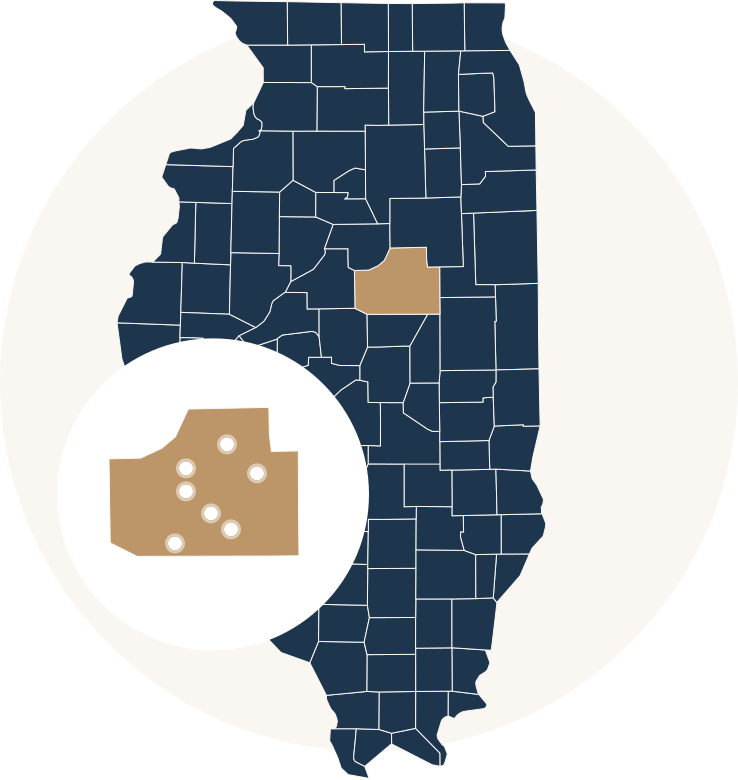
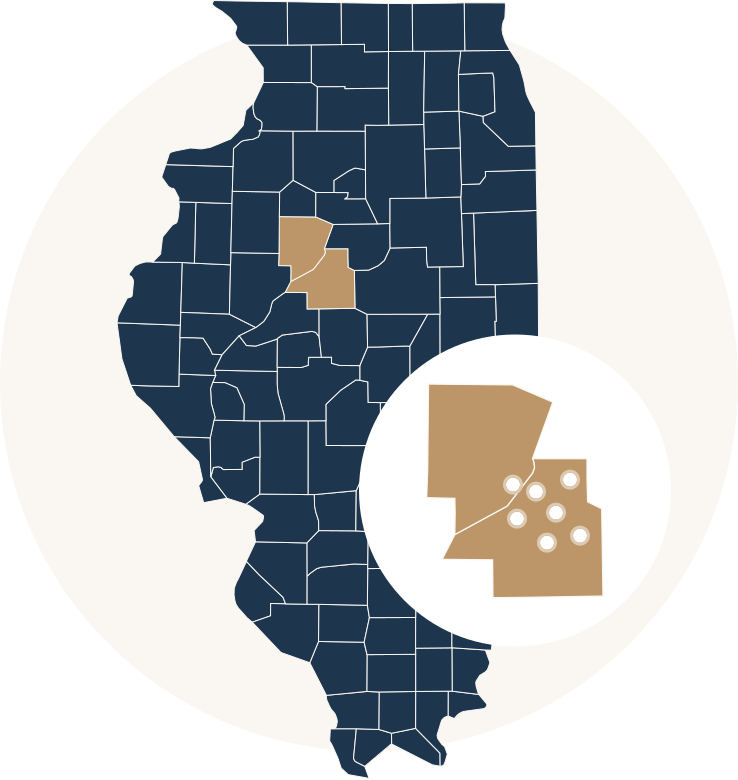
We Practice in Tazewell County Courts
We know the local probate process:
- Tazewell County procedures
- McLean County procedures
- Local judges and court staff
- How to make probate easier for your family
We Include Powers of Attorney
Wills only work after death. Powers of attorney cover incapacity while you’re alive:
- Financial powers for managing money
- Healthcare powers for medical decisions
Both are essential. We include both with every will.
We Handle Complicated Families
- Blended families (yours, mine, ours)
- Disinheritances
- Unequal distributions among children
- Children with special needs
- Estranged family members
We’ve handled these situations before.
We Provide Ongoing Support
- Annual check-ins included
- Updates when life changes
- Questions answered
- Simple revisions at no cost
You get a relationship, not just documents.
We Tell You if You’d Be Better Off With a Trust
We’re not just trying to sell wills. If your situation calls for a trust (usually homeowners), we’ll tell you honestly.
Schedule Your Will Consultation in Morton
Call (309) 824-6264 to discuss will preparation.
We’ll review your situation and explain what you need. No pressure. Just straight answers.
Will preparation services throughout Morton, East Peoria, Peoria, and Central Illinois.
Frequently Asked Questions
What's the difference between a will and a trust?
A will directs probate. A trust avoids it.
- Will: Court process, 12-18 months, $10,000-$20,000, public
- Trust: No court, immediate, private, costs more upfront but saves later
For homeowners: trusts usually make more sense. For non-homeowners: wills might be sufficient.
Illinois recognizes handwritten wills (holographic wills) if they meet requirements. But we regularly see problems:
- Vague language causes disputes
- Missing provisions create issues
- Improper execution makes it invalid
- Family challenges it in court
Cost of problems: $10,000+ to fix after you’re gone.
Sometimes. Often not. Issues we see:
- Doesn’t comply with Illinois law
- Missing critical provisions
- Not properly executed
- Doesn’t coordinate with asset titling
Your family pays to fix these problems when they’re grieving.
How often should I update my will?
Update when major life changes happen:
- Marriage or divorce
- Birth or adoption of children
- Death of named beneficiaries or executor
- Significant asset changes
- Moving to another state
We include annual check-ins to review whether updates are needed.
Can someone challenge my will?
Yes. Common challenges:
- Lack of mental capacity
- Undue influence
- Improper execution
- Fraud
Proper preparation with an attorney makes challenges harder to win.
What if I move to another state?
Illinois wills are generally valid in other states. But laws differ. If you move, have your will reviewed by an attorney in your new state.
What happens to my digital assets?
Your will should address:
- Social media accounts
- Email accounts
- Digital files
- Cryptocurrency
- Online banking
Give your executor authority to access and manage these.